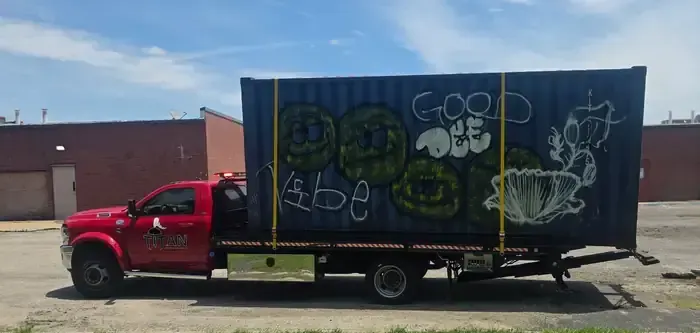
Load Shifted on the Highway: What to Do Before You Move
The warning signs of a shifted load, why opening the doors can be the most dangerous moment, securement checks the rules require, and when it needs recovery.
Read itThe Titan Tow & Repair blog answers the questions drivers and fleet managers actually ask before they call: what a heavy-duty tow costs in Kansas City, what to do when a semi stops on the shoulder, which air system faults can be fixed at the roadside, and how to tell a winch-out from a full recovery.
The warning signs of a shifted load, why opening the doors can be the most dangerous moment, securement checks the rules require, and when it needs recovery.
Read it
Why semi trailer landing gear seizes, strips or collapses, how to stay safe around a dropped nose, and what is repaired or lifted at the roadside or the dock.
Read it
How to tell whether a semi truck alternator has stopped charging, what else causes a battery warning, how far it will run, and what is fixed on site.
Read it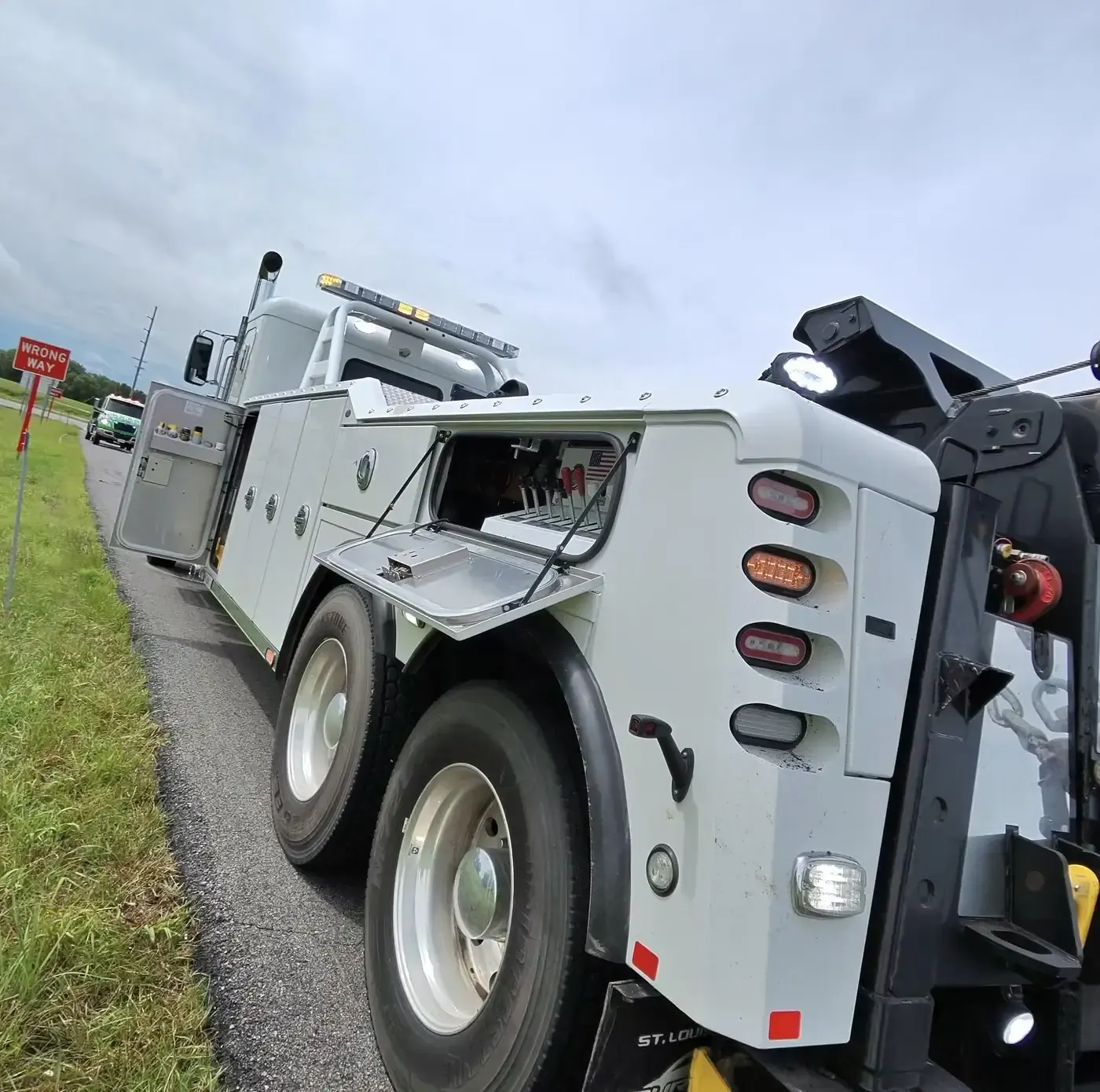
What makes a tractor-trailer jackknife, from locked drive wheels to empty trailers on ice, what to check afterwards, and how a jackknifed rig is recovered.
Read itHow to trace a semi truck coolant leak, from hoses and clamps to the radiator, water pump and EGR cooler, what is safe to check, and what is fixed roadside.
Read itWhen commercial truck insurance pays for towing and recovery, when it does not, why a breakdown differs from a crash, and what to ask your agent.
Read itWhat an ABS light means on a tractor or trailer, the usual causes from wheel sensors to trailer power, whether it is safe to drive, and what gets fixed.
Read it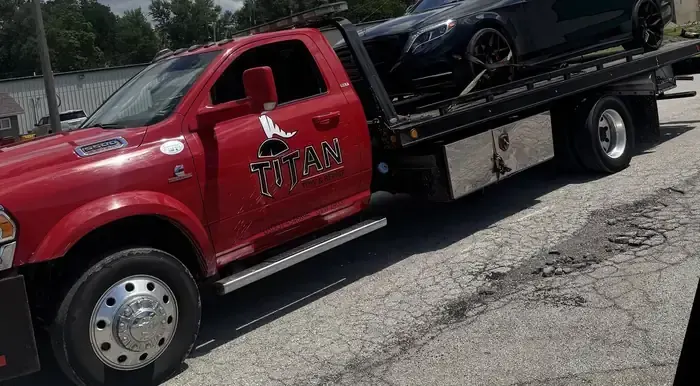
Private property towing law in Kansas City: signs, written authorization and police reports Missouri and KCMO require, the Kansas rules, and getting it back.
Read itWhy buses and motorcoaches need a different tow than a semi: passengers first, long overhangs, air suspension, the driveline, and where they are lifted.
Read itWhat AAA's own member guide for Missouri and Kansas says about commercial vehicles, weight limits and RVs, and what to ask your club before you need a tow.
Read itWhy a semi's air system builds slowly or not at all: governor, unloader, air dryer, frozen discharge line or a worn compressor, and what is fixed roadside.
Read itWhat decides how long a roadside semi tire replacement takes: reaching you, the wheel position, whether the tire is on board, and the torque job after.
Read itWhat a mobile diesel mechanic is, which faults get fixed where the truck stands, what has to go to a shop, and how a 24-hour road call is priced.
Read it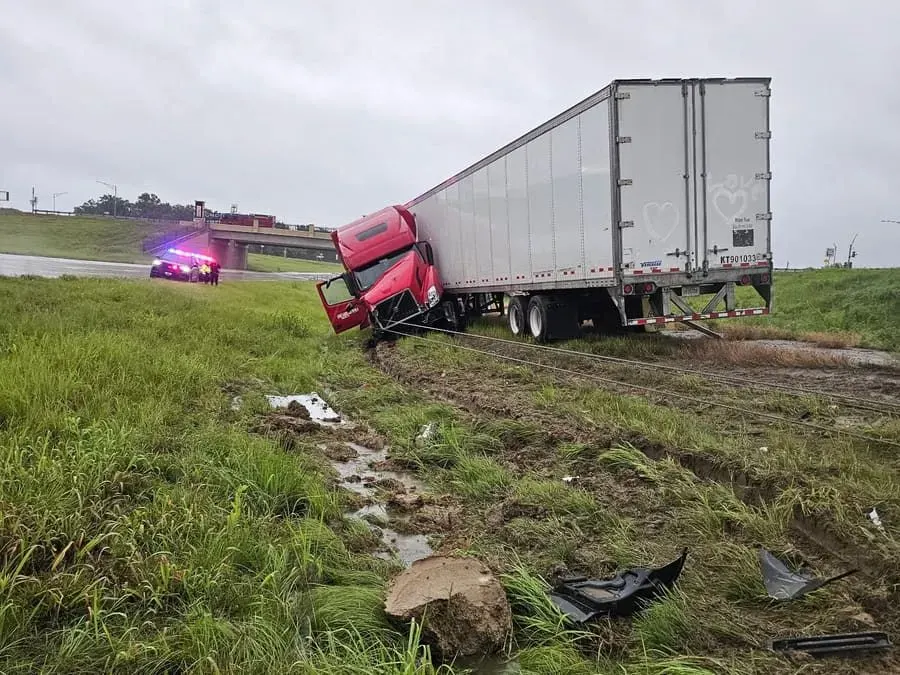
What follows a tractor-trailer rollover: scene safety, fluids and cargo, how the truck is uprighted, the paperwork carriers need, and what drives cost.
Read itHow to trace semi trailer light faults: the seven-way plug and pigtail, a bad ground, corroded sockets and damaged harness, and what gets fixed on site.
Read itWhy a semi spring brake stays locked after you push the knobs in: low air, crossed glad hands, frozen lines or a failed chamber, and what is fixed on site.
Read itWhy mobile truck and trailer repair is quoted per job, what makes a roadside repair cost more or less, and how it compares with towing to a shop.
Read it
The federal placement rule for semi truck warning triangles, at 10, 100 and 200 feet, plus hills, curves and night, and how to set them out safely.
Read it
What a rotator does that a standard heavy wrecker cannot, when a scene genuinely needs one, and why most heavy tows and recoveries do not.
Read itYes, and often it should be. How a semi-trailer is moved without its original tractor, what has to work first, and who has to authorize it.
Read itWhat the DEF and regen lamps each mean, why a regeneration will not finish, which causes are roadside-fixable, and how to avoid a 5 mph derate.
Read itWhy a hot shot with a loaded gooseneck falls between rollbacks and heavy wreckers, what to tell dispatch, and how truck and trailer each get moved.
Read itLoaded, no. Empty and level, sometimes a short slow limp. How to tell a blown air bag from a height-control valve, and what gets replaced at the roadside.
Read itHow to tell a dragging trailer brake from a failed bearing, why a hot hub is a stop-now fault, and what the service truck can and cannot fix on the shoulder.
Read itAlmost every article here started as a question someone asked on the phone at a bad moment — usually standing on a shoulder, usually with a load that is now late. The answers are the ones we would give on that call, written down so you can read them before you need them rather than during.
There are no prices in them. A heavy tow is quoted per job, because the access, the angle, the weight and the distance move the number far more than any list could, and a published figure would be wrong for most of the people reading it. What these articles do instead is explain what drives the cost, so you can tell whether the quote you are given is reasonable — including a quote from somebody other than us.
Broadly three things. What to do in the first ten minutes — where to stand, what to put out, what to tell dispatch, and the decisions that are hard to undo later. Repair or tow — which faults can genuinely be fixed where the truck is standing and which ones cannot, because that single decision usually accounts for the largest difference in what a breakdown costs you. And how to choose — what certification and insurance actually mean, and which questions separate a company that can do the job from one that will find out on your vehicle.
If you are reading this because something has already gone wrong, stop reading and call (816) 888-8732. The articles will keep.