
Mobile truck repair
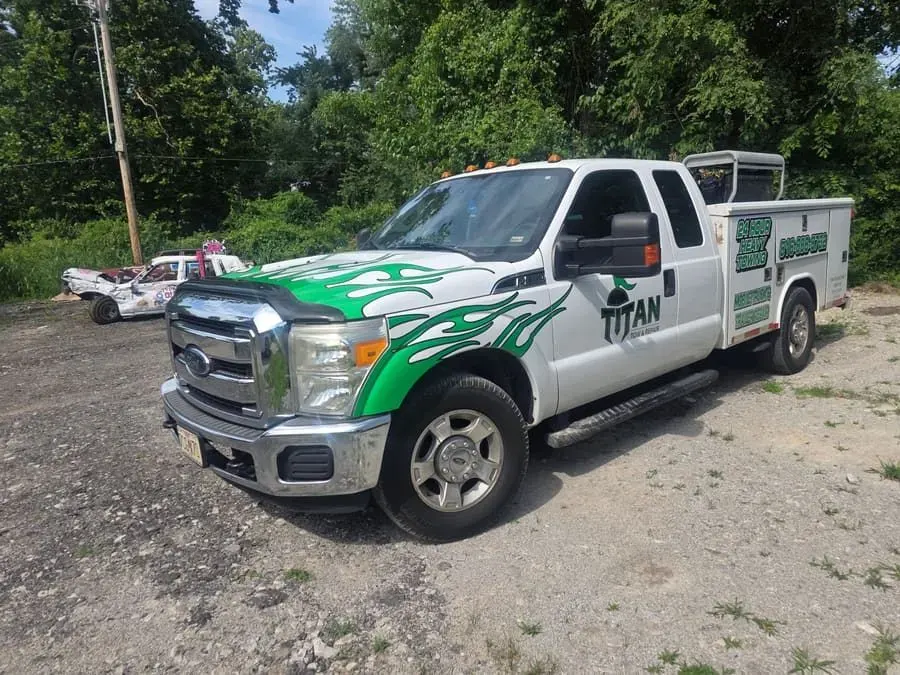
Our service truck carries the parts and the tools. Faster for your driver, cheaper for your office, and the load keeps moving.
Read about mobile truck repairTitan Tow & Repair provides mobile semi trailer repair across Kansas City, northwest Missouri and northeast Kansas, 24 hours a day. We fix lighting and wiring faults, landing gear, air lines and glad hands, trailer brakes, doors and hardware, and tires and wheel ends, on dry vans, reefers and flatbeds — loaded or empty, at a dock, a yard or the shoulder.
Page updated
Most trailer faults do not stop a trailer moving. They stop it being legal to move, which is worse — the load sits while the paperwork says it cannot go anywhere.
Also called: semi trailer repair · roadside trailer repair · trailer brake repair · trailer light repair · landing gear repair · trailer air line repair
If it is on this list, say so on the phone and the right unit is dispatched the first time.
| Service | Mobile trailer repair |
|---|---|
| Available | 24 hours a day, every day — nights, weekends and holidays |
| Dispatched from | 2751 Liberty Landing Rd., Liberty, MO 64068 |
| Coverage | Kansas City, northwest Missouri and northeast Kansas, from St. Joseph and Cameron to Topeka — every town and county |
| Arrival | Usually within about 60 minutes for most of the metro — a real ETA for your exact location when you call |
| Phone | (816) 888-8732 |
Dry van, reefer or flatbed, loaded or empty, and what has failed. That decides which parts come on the truck.
Dock, yard, scale or shoulder. The trailer does not have to be coupled and the tractor does not have to stay.
Fixed on the spot where the fault allows it. Where it does not, we are a towing company on the same phone number.
Dry van, reefer or flatbed, loaded or empty: what has failed decides which parts come on the truck.
| What happens on site | Tell us when you call | |
|---|---|---|
| Lights and wiring | Lamps, harnesses, seven-way plugs and grounds fixed at the trailer | Which lamps are dead and whether they died together |
| Brakes that will not release | Chamber, relay valve or line fault found and fixed | Whether it built full pressure and the red knob stays in |
| Doors and hardware | Roll-up and swing doors, hinges, latches and seals | What the door is doing and whether it is loaded |
| Dropped trailer at a dock or yard | Worked on without the tractor or a driver there | Gate procedure, who to call and the unit number |
| Reefer refrigeration unit | Not repaired: that needs the manufacturer’s service network | Whether it will not cool or will not roll |
Every city we cover gets the same service from the same yard. Pick yours for local detail — corridors, drive time and what tends to go wrong there.
Trailer Landing Gear Won't Crank or Has Collapsed — Why semi trailer landing gear seizes, strips or collapses, how to stay safe around a dropped nose, and what is repaired or lifted at the roadside or the dock.
Trailer Lights Not Working? Troubleshoot the Seven-Way — How to trace semi trailer light faults: the seven-way plug and pigtail, a bad ground, corroded sockets and damaged harness, and what gets fixed on site.
Trailer Brake Dragging or a Hot Hub: Roadside Fix or Tow? — How to tell a dragging trailer brake from a failed bearing, why a hot hub is a stop-now fault, and what the service truck can and cannot fix on the shoulder.
DOT Out of Service: Faults That Freeze a Running Truck — What a DOT out-of-service order means, who declares one, which faults trigger it on a truck that runs fine, and the repair-and-certify path back into service.
Reefer Down: Protecting the Load When the Unit Stops Cooling — What to do when a reefer stops cooling: work the temperature clock, read the alarm, check fuel first, know who fixes what, and keep the records that matter.
ABS Light On: Semi Tractor or Trailer, and Is It Safe? — What an ABS light means on a tractor or trailer, the usual causes from wheel sensors to trailer power, whether it is safe to drive, and what gets fixed.
Semi Brakes Won't Release: What to Check First — Why a semi spring brake stays locked after you push the knobs in: low air, crossed glad hands, frozen lines or a failed chamber, and what is fixed on site.
What Mobile Truck & Trailer Repair Costs in Kansas City — Why mobile truck and trailer repair is quoted per job, what makes a roadside repair cost more or less, and how it compares with towing to a shop.
More general questions — pricing, insurance, response times — are answered on the FAQ page.
Our service truck carries the parts and the tools. Faster for your driver, cheaper for your office, and the load keeps moving.
Read about mobile truck repairA blown tire is the most common thing that stops a truck, and the one most often fixed on the shoulder. We bring the tire to you rather than the truck to a shop.
Read about mobile tire serviceA loaded tractor-trailer is not a bigger car. It needs a rated wrecker, a rated operator and a plan before anything gets hooked. That is what we send.
Read about heavy-duty towingFleets do not need a hero, they need a truck that turns up and paperwork that reconciles. We do both.
Read about fleet & commercial towingYes, and lighting faults are ones we fix at the trailer. A lighting fault is the classic example of a trailer that drives perfectly and still cannot legally leave — an inspector will hold it, and the load sits until the lamp works. We carry markers, tails, brake and turn lamps, harness repair parts and seven-way plugs on the service truck, and most of these faults turn out to be a corroded ground or a chafed harness rather than the lamp itself. Tell us which lamps are dead and whether they died together, because that on its own usually tells us where the fault is before we set off.
We repair the trailer — lights, wiring, brakes, air lines, landing gear, doors and tires — on a reefer the same as on a dry van. What we do not do is repair the refrigeration unit itself: that is specialist work on a sealed system, and a reefer plant that has stopped holding temperature needs the manufacturer's service network rather than a roadside truck. Call us for the trailer and we will be straight with you about which of the two you actually have, because a reefer that will not cool and a reefer that will not roll are different problems with different answers.
Yes — dropped trailers at docks, drop yards and distribution centers are a large share of trailer work, and the tractor does not need to be there. Tell us the gate procedure, who to call on arrival and the unit number so we work on the right trailer; a yard with forty trailers in it is exactly where the wrong one gets fixed. If the yard has restricted hours, say so when you call — that changes when we can be there, not whether.
Yes — roll-up and swing doors, hinges, latches, seals and damaged rear frames are on the standard list. Door faults sit in the same category as lighting: the trailer drives fine and still cannot work, because a door that will not shut or seal is a load that cannot be secured or a reefer that cannot hold temperature. Describe what the door is doing and whether the trailer is loaded, and we will say honestly whether it is a roadside repair or bodywork for a shop.
Almost always because air is not reaching the trailer's spring brakes, which are applied by springs and held off by air. Check that the system has built full pressure, that the red trailer air supply knob stays in and that the glad hands are not crossed or leaking. If all of that is right and the brakes still hold, a leaking chamber, a failed relay valve or ice in the lines is the likely cause. Titan Tow & Repair finds and fixes the fault where the trailer is standing, 24 hours a day.
Yes. The same mobile service truck works on the tractor and the trailer on one call: air systems and brakes, batteries and charging, cooling and diagnostics on the truck, and lights, wiring, landing gear, air lines, brakes and doors on the trailer. Tell dispatch on (816) 888-8732 everything that is wrong with both units, so the right parts are on the truck before it leaves.
No. A dropped trailer at a dock, in a yard or on a lot is a job we do without the tractor, and there is no need for a driver to sit with it while we work. Tell us where it is, how we get through the gate and who to call when we arrive, and give us a way to confirm the unit number so we work on the right trailer — a yard with forty trailers in it is exactly where the wrong one gets fixed. If the trailer is somewhere with restricted hours, say so when you call, because that changes when we can realistically be there rather than whether we can.