
What does mobile truck and trailer repair cost, and what drives the bill?
Mobile truck and trailer repair is priced per job rather than from a flat rate card, because the bill depends on the actual fault, the parts, how long diagnosis and repair take, and where the truck is sitting. The fair comparison is not the repair bill on its own, but the repair against a tow, the shop's labor and the days the truck would sit waiting.
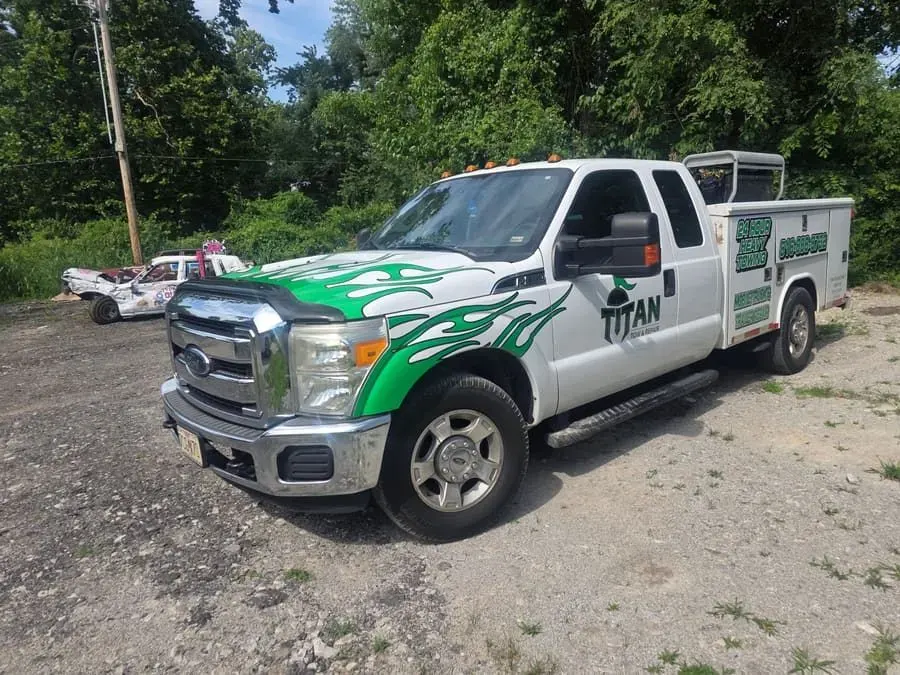
Why there is no honest flat price
The same symptom can be five different faults. A truck that will not start might need a battery, a starter, a fuel filter, a fix to a DEF problem or a repair to a wiring connection, and those jobs differ enormously in parts and time. A price quoted before anyone knows which one it is can only be a guess, and a published rate that ignores that is either padded to cover the worst case or quietly incomplete.
What an honest mobile repair service can do on the phone is narrower but more useful: listen to what the truck is doing, say what it most likely is, say whether it sounds like something that gets fixed at the roadside or something that ends in a tow, and explain how the job will be charged. That is a real answer. A number pulled out of the air to win the call is not.
What goes into a mobile repair bill
Mobile repair bills are usually built from some combination of the same few parts. Knowing what they are makes any quote easier to read and easier to compare.
- Getting the truck to you. A service truck, a technician and the parts and tools it carries have to drive to wherever you are, and distance and conditions affect that.
- Diagnosis. Reading fault codes, testing circuits and finding the actual cause. On a clear fault this is quick; on an intermittent electrical problem it can be most of the job.
- Labor. The time spent doing the repair itself, which depends on the fault and on how accessible the part is on that particular truck.
- Parts. Whatever has to be replaced. Common parts carried on the service truck go straight in; anything that has to be sourced adds time.
- Conditions. Working safely beside live traffic, in heavy rain, in the cold or in the dark can slow a job that would be quick in a yard, and some jobs need extra setup before work can start.
What makes the same repair cost more or less
- Where the truck is. A truck at a yard or a dock is quicker and safer to work on than one on a narrow shoulder, and a nearby call takes less time to reach than one at the edge of the service area.
- Whether the part is on the truck. When the right part is already on the service truck, the repair happens in one visit. When it is not, the choice is a parts run or a second trip.
- How clearly the fault is described. Accurate fault codes, a clear description of the symptoms and the make, model and engine of the truck let the right parts come on the first trip.
- Whether it turns out to be what it looked like. Sometimes diagnosis finds a different or bigger fault than the symptom suggested, and the job changes with it.
- What has already been tried. Knowing that a battery has already been swapped, or a filter already changed, saves diagnosis time that would otherwise repeat work already done.
| Costs less when | Costs more when | |
|---|---|---|
| Where the truck is | At a yard, a dock or nearby | Narrow shoulder or edge of the service area |
| Whether the part is on board | Already on the service truck | Needs a parts run or second trip |
| How the fault is described | Accurate codes, symptoms, make, model and engine | Vague, so diagnosis takes longer |
| What diagnosis finds | It is what it looked like | A different or bigger fault |
| What was already tried | You say what was swapped or changed | Diagnosis repeats work already done |
Trailer and tire repairs: what moves the price
Trailer work is quoted per job in the same way, and the first thing that shapes the job is which fault it is: lights and wiring, landing gear, air lines and glad hands, trailer brakes, doors and hardware, or tires and wheel ends. With lighting, a dead lamp often turns out to be a corroded ground or a chafed harness rather than the lamp itself, which is where the diagnosis time goes. Markers, tails, brake and turn lamps, harness repair parts and seven-way plugs are carried on the service truck.
Mobile trailer repair covers dry vans, reefers and flatbeds, loaded or empty, at a dock, a yard or the shoulder, and the tractor does not need to be there for work on a dropped trailer. The boundary is the refrigeration unit on a reefer: that is specialist work on a sealed system, and it needs the manufacturer's service network rather than a roadside truck.
Tires follow the same logic. The service truck carries commercial tires in the common sizes, and the size off the sidewall and the position — steer, drive or trailer, inside or outside dual — given on the phone are the difference between a single road call and two. A clean puncture in the tread area of a sound casing is often repairable; a sidewall injury or a casing that has been run flat is replaced, and the studs, nuts and hardware a failure damages are part of the same job. What the service truck does not do is retreading or wheel alignment; the mobile tire service page lists what it does.
Roadside repair versus a tow and a shop
The number to compare a mobile repair against is not a shop's hourly rate. It is everything the other route costs: the tow to the shop, the shop's own diagnosis and labor, and the time the truck and its load spend sitting in a queue waiting for a bay. For a truck earning money by the mile, the days out of service are often the largest cost of all, even though they never appear on any invoice.
For faults that can be fixed where the truck stands — air leaks, batteries and charging, many cooling and electrical faults, trailer lights and brakes — a roadside repair skips the tow and the queue entirely. But it is not always the cheaper route, and a company that pretends otherwise is not doing you a favor. If the fault is genuinely a shop job, a mobile call that ends in a tow anyway costs more than calling the tow in the first place. The valuable thing is a straight answer on the phone about which way it is likely to go. For the towing side of that comparison, see what a heavy-duty tow costs in Kansas City.
Five ways to keep the bill down
- Describe the symptoms precisely. What the dash says, word for word, what the gauges show, what it sounds like and when it started. Vague descriptions cost diagnosis time.
- Give the truck's details. Make, model, year and engine decide which parts fit, and they decide whether the right part comes on the first trip.
- Give an exact location and safe access. A mile marker and direction, or a building and dock door, gets the truck to you without a search.
- Send photos if you can. A picture of a leak, a warning light or a damaged part answers questions that would otherwise wait for arrival.
- Have the authorization ready. For fleet trucks, know who approves the work and what purchase order or account details the invoice needs before the technician arrives.
Questions worth asking before the truck rolls
The questions below are reasonable to put to any mobile repair company, including us, and a good one will answer them without hesitation.
- How is this call charged, and what is included in that?
- Is diagnosis charged separately from the repair itself?
- Do you expect to carry the part I am likely to need, or will it have to be sourced?
- If diagnosis finds a different fault, how will you tell me before the price changes?
- What payment methods do you take, and what will the invoice show for my records?
How we handle it
When you call us, we listen to what the truck is doing and tell you on the phone what we expect the job to involve and whether it sounds like a roadside fix or a tow, before anyone rolls. If diagnosis at the truck turns up something different, you hear about it before the work changes, not on the invoice. We take cash, Visa, Mastercard, American Express and Discover, and we set up fleet accounts and handle insurance billing for companies that need it.
Our mobile truck repair page lists the faults the service truck handles most often across Kansas City, northwest Missouri and northeast Kansas. If yours is not on it, call and describe it anyway. The answer might be that it is a shop job, and that is still worth knowing before you spend anything.
Related reading
Semi Brakes Won't Release: What to Check First — Spring brakes are held off by air, so brakes that will not release almost always mean air is not reaching them.
ABS Light On: Semi Tractor or Trailer, and Is It Safe? — An ABS warning light means the anti-lock system has found a fault and may not prevent wheel lockup on the affected vehicle.
Can You Drive a Semi With a Blown Airbag? Loaded vs Empty — A loaded semi should not be driven on a blown air bag, and no truck should move with the axle down on the frame or a tire touching anything.
What this covers
Mobile truck repair
Our service truck carries the parts and the tools. Faster for your driver, cheaper for your office, and the load keeps moving.
Mobile truck repair detailsMobile trailer repair
Most trailer faults do not stop a trailer moving. They stop it being legal to move, which is worse — the load sits while the paperwork says it cannot go anywhere.
Mobile trailer repair detailsMobile tire service
A blown tire is the most common thing that stops a truck, and the one most often fixed on the shoulder. We bring the tire to you rather than the truck to a shop.
Mobile tire service detailsIn a specific city: Diesel mechanic and mobile semi truck repair in Kansas City, Missouri · Mobile truck and trailer repair in Riverside, Missouri · Mobile truck and trailer repair in Liberty, Missouri · Mobile semi truck and trailer repair in Saint Joseph, Missouri · Mobile truck repair and a diesel mechanic on call in Topeka, Kansas