Winch-out or recovery? The difference, and why it changes the bill
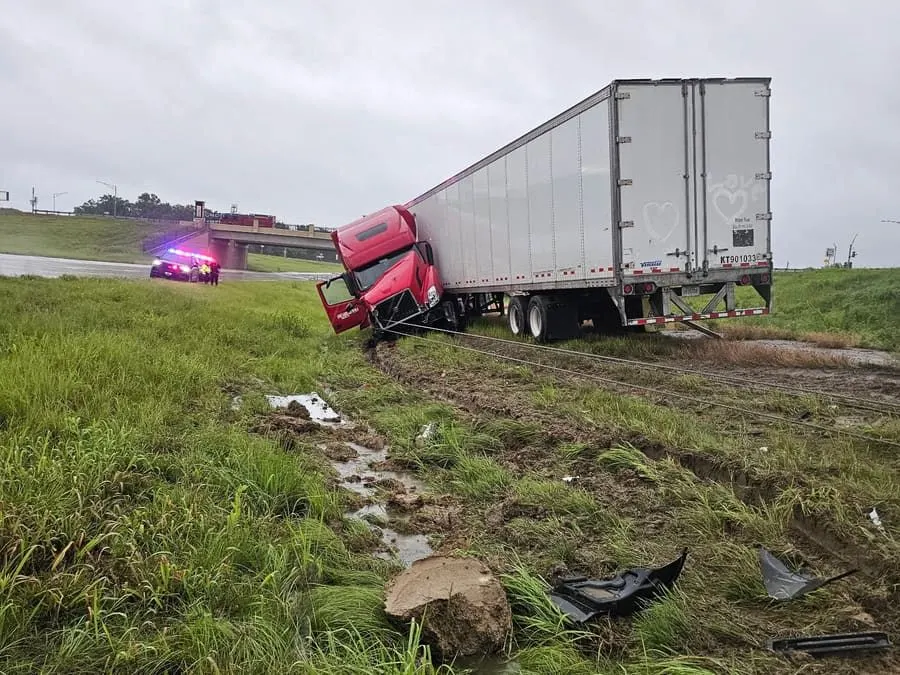
A winch-out pulls an otherwise undamaged vehicle back onto the pavement — off a soft shoulder, out of mud or a shallow ditch — and is usually a single truck and a straight pull. A recovery is what happens when the unit is rolled, jackknifed, stacked or the load has shifted, and it needs rigging, planning and often multiple trucks.
The short version
If the truck is upright, undamaged, and the only problem is that the wheels have no traction where they are, that is a winch-out. If the truck is on its side, folded, off a significant drop, or the freight has moved, that is a recovery.
The distinction matters because they are priced differently and, more importantly, because getting a recovery wrong destroys equipment and hurts people.
What a winch-out involves
One truck, a winch line, an anchor point on the casualty and a straight or lightly angled pull. Around Kearney and the rural roads either side of Route 92 we do a lot of these after rain, when a wheel has dropped off the pavement into a soft shoulder that looked solid.
It is usually quick. The main variables are how far off the pavement the unit is, whether it is loaded, and whether there is anywhere to put the recovery truck safely.
What a recovery involves
A plan before anything moves. Where the rigging points are, what angle the pull runs at, what the load is doing, what happens to the casualty as it comes over, and where everyone stands while it does.
This is where WreckMaster training earns its keep. An unrated pull at the wrong angle can fold a trailer that was otherwise repairable, drop a load across a live lane, or part a line under tension — which is the failure mode that injures people on the shoulder.
The grey area
Plenty of jobs start as one and turn into the other. A unit sitting at an angle in a ditch might come out with a single line, or might need stabilising and a second truck once we can see how the weight is sitting. Soft ground near the river around Riverside is a common example — if the trailer has sunk rather than slid, the whole plan changes.
We will tell you which one we think it is on the phone, and tell you again on scene if it turns out to be the other one. What we will not do is quote a winch-out and invoice a recovery without a conversation in between.
What helps us most
A photo. One photo of how the unit is sitting tells us more than five minutes of description: the angle, the ground, the drop, whether the trailer is still tracking, and where we can put a truck. Send it when you call.
What this covers
Winch-outs & recovery
Bad rigging wrecks loads and hurts people. Recovery is the part of this job where training is the whole difference.
Winch-outs & recovery detailsHeavy-duty towing
A loaded tractor-trailer is not a bigger car. It needs a rated wrecker, a rated operator and a plan before anything gets hooked. That is what we send.
Heavy-duty towing details