Flatbed or wrecker: which one does your vehicle actually need?
A flatbed carries the whole vehicle with all four wheels off the road; a wrecker lifts one axle and tows with the other two wheels rolling. All-wheel-drive vehicles, electric vehicles, low-clearance cars and anything with drivetrain or transmission damage should go on a flatbed, because towing them with wheels turning can damage the drivetrain. Most front-wheel-drive cars can be towed either way.
The actual difference
A wrecker lifts one end of your vehicle and tows it with the other two wheels rolling along the road. It is quick to hook and it is what most people picture when they think of a tow truck.
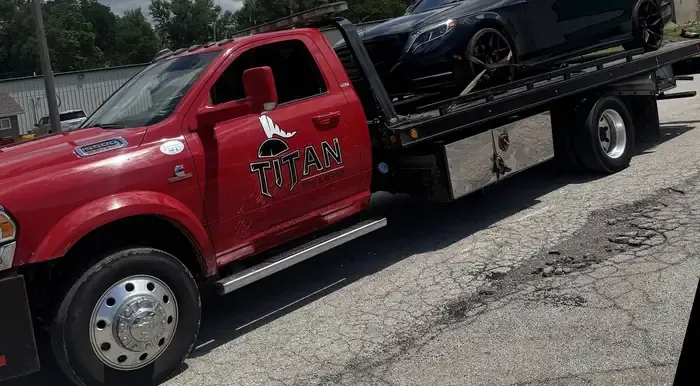
A rollback flatbed tilts its whole deck to the ground, winches the vehicle up, and carries it with nothing touching the pavement. It takes a few more minutes to load, and for a lot of modern vehicles it is the only correct answer.
When it has to be a flatbed
- All-wheel drive and four-wheel drive. On many AWD systems, rolling one axle while the other is lifted turns the drivetrain against itself. Manufacturers commonly specify flatbed transport for this reason — your owner’s manual will say.
- Electric vehicles. Most EV makers require flatbed transport. Driven wheels turning can push current back through the motor, and there is no neutral that fully disconnects the drivetrain the way there is in a petrol car.
- Low front ends. Sports cars, lowered cars and some sedans will contact the ramp before they reach the deck. That is what wood blocks and extended ramps are for, and it is worth mentioning on the phone.
- Transmission or drivetrain damage. If the problem is the gearbox, the differential or a wheel bearing, nothing should be rolling.
- Crash damage, or wheels that will not turn. A seized brake or a bent suspension arm makes a wheels-down tow a dragging operation.
When a wrecker is fine
Plenty of jobs do not need a deck. A front-wheel-drive car with a dead battery, an empty fuel tank or a flat tyre can go on a wrecker with its driven wheels lifted, and a rear-wheel-drive car can go the other way round.
Short moves inside a lot, recoveries where a flatbed cannot reach, and vehicles being pulled out before being loaded are all wrecker work. Sometimes both are involved: winched out with a wrecker, then carried in on a deck.
What to tell dispatch
The point of asking these questions on the phone is to send the right truck first time. A wasted trip costs you time and, with many operators, money.
- Year, make and model — that alone answers the drivetrain question.
- Whether it is front-wheel, rear-wheel or all-wheel drive, if you know.
- Whether it rolls, steers and comes out of park.
- Whether it is lowered or has body kit close to the ground.
- Where it sits: a tight garage, a soft verge and a live shoulder each need different equipment.
If you are not sure, say so
You do not need to diagnose your own car before you call. Read the badge on the back, tell us what it is doing, and we will work out which truck to send — that is our job, not yours.
What matters is that the question gets asked at all. A vehicle that should have been flatbedded and was not can arrive at the shop with a bigger bill than the fault it went in for.
What this covers
Light-duty towing
The same yard that runs the heavy wreckers runs the rollbacks, so a car gets the same answer at 3am that a semi does.
Light-duty towing detailsHeavy-duty towing
A loaded tractor-trailer is not a bigger car. It needs a rated wrecker, a rated operator and a plan before anything gets hooked. That is what we send.
Heavy-duty towing details