
Air leak on a semi: what gets fixed at the roadside and what does not
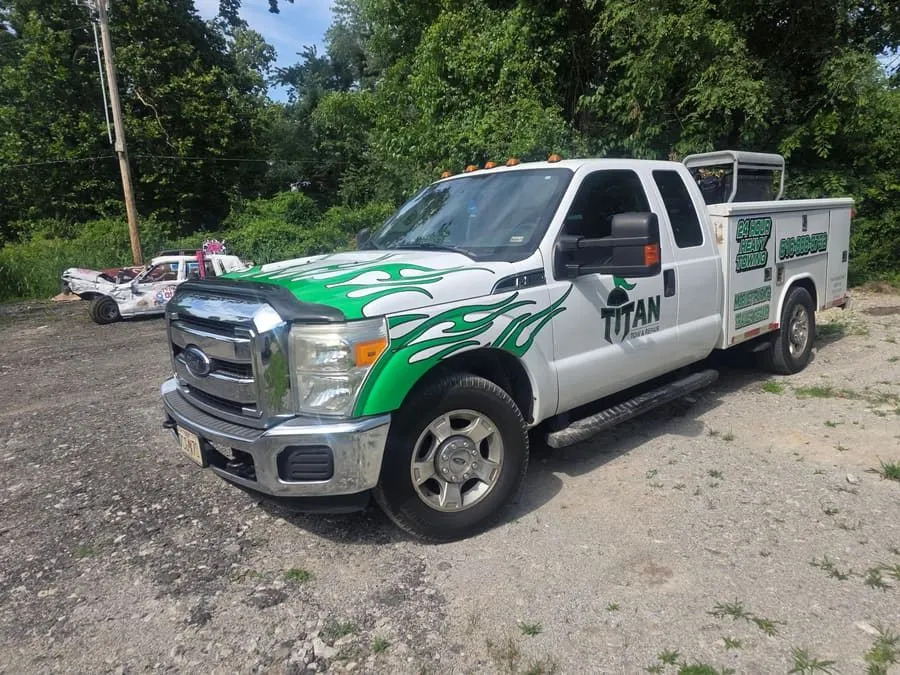
Most air system faults on a semi are roadside-repairable: leaking glad hands, blown air lines, failed brake chambers, stuck slack adjusters and leaking fittings can all be replaced on the shoulder by a mobile service truck. Compressor failures, governor faults buried in the engine bay and anything requiring the unit to be lifted need a shop.
Why this question is worth asking
An air leak is the most common call our service truck runs. It is also the fault most likely to be towed unnecessarily, because "it will not build air" sounds terminal and a lot of operators only own tow trucks — so a tow is the only answer they have.
The difference is real money. A roadside fix means no tow bill, no shop intake queue and a driver who is rolling again the same day.
Usually fixable where it sits
- Glad hand seals and couplers. The single most common cause of a trailer that will not charge. Minutes to replace.
- Air lines. A chafed or blown line between tractor and trailer, or along the frame, gets cut and replaced on the shoulder.
- Brake chambers. A ruptured diaphragm is a replace-in-place job on most units.
- Slack adjusters. Seized or out-of-adjustment adjusters can usually be freed or swapped roadside.
- Fittings and valves. Leaking push-to-connect fittings, relay valves and quick-release valves are carried as stock items.
- Trailer air leaks generally. The majority are in the plumbing rather than in anything structural.
Usually needs a shop
- Air compressor failure. Buried, heavy, and needs the engine cool and stationary.
- Air dryer replacement. Sometimes roadside, often not, depending on mounting and access.
- Governor faults inside the engine bay. Diagnosable roadside, frequently not repairable there.
- Anything needing the unit lifted. If it needs a hoist, it needs a shop.
- Cracked reservoirs or frame-mounted tanks. Replacement is a shop job.
How to describe it on the phone
Four pieces of information tell us whether to send the service truck or the wrecker: does it build air at all, how fast does it drop, can you hear where it is leaking, and is it on the tractor or the trailer.
If it builds and holds but drops overnight, that is a slow leak and almost certainly roadside work. If it will not build past 60 PSI, that points at the compressor or governor and is more likely a shop. If the leak is audible at the coupling, it is very likely a glad hand and you may be moving in fifteen minutes.
One thing not to do
Do not drive it to "get it somewhere better" if the air is dropping fast. Air brakes fail to the applied position by design — that is the safety feature — but you do not want that happening at speed in traffic while you are trying to reach an exit. Stop where it is safe and call from there.
What this covers
Mobile truck repair
Our service truck carries the parts and the tools. Faster for your driver, cheaper for your office, and the load keeps moving.
Mobile truck repair detailsFleet & commercial towing
Fleets do not need a hero, they need a truck that turns up and paperwork that reconciles. We do both.
Fleet & commercial towing details